When a manufacturing company prepares for a sale or acquisition, the auditors descend. They scrutinize the P&L, stress-test the inventory, and audit the accounts receivable.
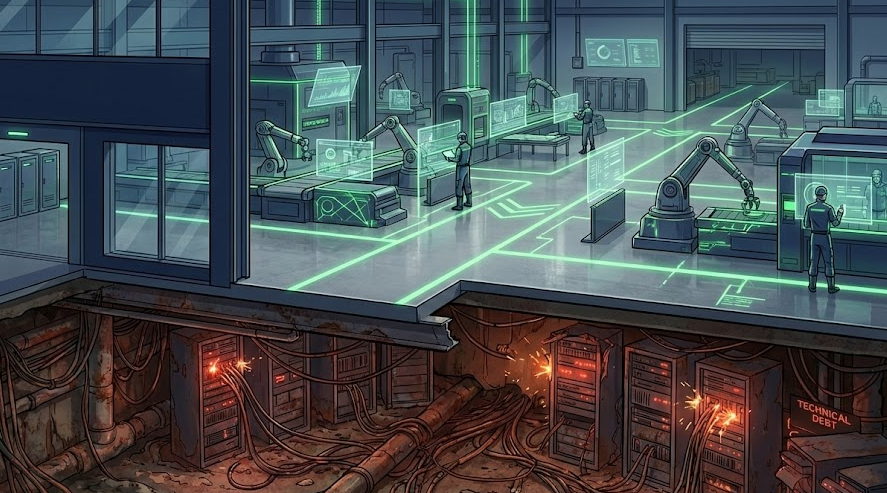
But there is a liability they often miss until it kills the deal: Technical Debt.
In the Oak Ridge and Knoxville industrial corridor, I see successful companies running on duct tape. They have excellent revenue and loyal customers, but their "engine" - the technology stack - is a disaster waiting to happen.
If you are an owner looking to exit, or a Holding Company looking to acquire, you need to understand that Messy IT is not just an annoyance. It is a discount on your EBITDA.
What Does "Technical Debt" Look Like?
Technical Debt isn't about having old laptops. It is the accumulation of shortcuts, "temporary fixes," and undocumented processes that compound over time.
In a mid-market manufacturing firm, it usually looks like this:
-
The "Key Person" Risk: Only one employee, Bob, knows how the inventory system talks to the shipping label printer. If Bob wins the lottery, your supply chain stops.
-
The Excel "Database": You bought a fancy ERP (like NetSuite or SAP), but your team hates it. So, the real production schedule actually lives on a massive, crash-prone Excel spreadsheet on the Plant Manager’s desktop.
-
The Integration Spaghetti: Your CRM doesn’t talk to your Accounting software natively, so someone wrote a custom script five years ago to bridge them. That script is undocumented, unsecure, and breaking silently.
The Valuation Hit
When a buyer, whether it's a Private Equity firm or a larger competitor, performs Due Diligence, they are looking for risk.
-
If your code is undocumented: They calculate the cost to rewrite it (CapEx deduction).
-
If your systems are insecure: They calculate the potential ransomware liability (Risk adjustment).
-
If your "Bob" is vital: They force an "Earn-Out" period because they don't trust the operations to survive without the legacy staff.
I have sat in the seat during these acquisitions. I have seen asking prices slashed by 10-15% simply because the technology stack was deemed "unstable."
How to Pay Down the Debt
The good news is that Technical Debt is solvable. But you cannot fix it with a "help desk" ticket. It requires Strategic Remediation.
At Attenity, we perform Technical Due Diligence Audits for owners before they go to market. We look for the skeletons in the digital closet so you can bury them properly.
-
Document the Undocumented: We map the data flows and create the "Standard Operating Procedures" (SOPs) that make your systems transferable.
-
Kill the Zombies: We identify and decommission the legacy servers and unused software licenses that are bleeding cash.
-
Bridge the Silos: We use modern, enterprise-grade APIs to connect your ERP and CRM, eliminating the fragile "duct tape" scripts.
Build an Asset, Not a Liability
Technology should be a multiplier on your valuation, not a discount.
If you are planning to sell, acquire, or just scale in 2026, don't let a messy server room determine your net worth. Let’s clean up the balance sheet.
Is your Tech Stack an asset or a liability? Book a Technical Health Assessment